Serious failings Defence quietly releases war crimes inquiry response plan
Defence has released a four-year plan to address the serious and systemic organisational and cultural failings exposed by the Afghanistan war crimes inquiry which commits to determining whether to strip war medals from soldiers by the end of 2021.
The plan was quietly posted on the website of the Inspector-General of the Australian Defence Force on July 30, with Defence opting not to release any public statement or informing media about its publication.
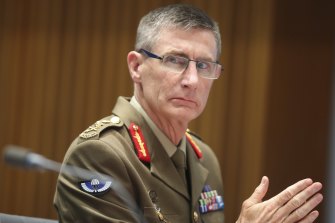
Chief of the Defence Force General Angus Campbell says there were serious organisational and culture failings.Credit:Alex Ellinghausen
Under the plan, Defence aims to come to “initial determinations†on whether to strip medals from soldiers who have committed serious wrongdoing and compensate Afghan victims by the end of 2021. It then wants to deliver a “transformational reform†package over more than four years to end of 2025, which will to address “what went wrong†and prevent and respond to “any future issuesâ€.
The Brereton inquiry last year found credible evidence of 39 unlawful killings of Afghan civilians or prisoners by Australian soldiers, raising the alarm about a “warrior culture†within Australia’s special forces and “the clique of non-commissioned officers who propagated itâ€.
In a forward to the report, chief of the Australian Defence Force General Angus Campbell and Defence secretary Greg Moriarty, said Defence accepted responsibility for the “failings in systems, culture and accountabilityâ€.
“Misconduct as serious as that identified and alleged by the Afghanistan Inquiry cannot occur unless there have been serious and systemic organisational and cultural failings,†they said.
“These failings created an environment which allowed Defence’s proud and respected reputation, earned by our professional and ethical personnel over decades, to be damaged by the actions of a few.â€
The four-year inquiry by NSW Court Of Appeal Justice Paul Brereton found there was credible evidence of 23 incidents in which one or more non-combatants - or individuals who had been captured or injured - were unlawfully killed by special forces soldiers, or at least at their direction. There were also a further two incidents the report said could be classified as the war crime of “cruel treatmentâ€.
In April, the federal government stepped in to stop the 3408 members of the Special Operations Task Group from being stripped of the military honours awarded for their service in Afghanistan. The move to revoke the unit citation was a key recommendation of the Brereton war crimes inquiry, which found credible allegations that special forces soldiers committed 39 murders in Afghanistan.
The Sydney Morning Herald and The Age revealed in June that General Campbell and Mr Moriarty warned Defence Minister Peter Dutton against allowing special forces troops to keep their meritorious unit citation from Afghanistan because it posed a risk to Australia’s moral authority.
A Department of Defence briefing obtained under Freedom of Information laws said a failure to strip the unit of its citation would threaten the “international and domestic reputation†of the Australian Defence Force and cause further harm to Afghan victims.
Anthony Galloway is foreign affairs and national security correspondent for The Sydney Morning Herald and The Age.
0 Response to "Serious failings Defence quietly releases war crimes inquiry response plan"
Post a Comment